
We had a packed room at Huron Public Library today, full of small business leaders ready to explore what AI can actually do for them. Our workshop, AI in Action: Practical Tools for Small Business, started with an introduction to AI and moved into five real-world, hands-on examples.
My goal was simple: make AI approachable. You do not need to be a programmer to get started. If you can describe what you need, ask a question, and check the answer, you already have the foundation.
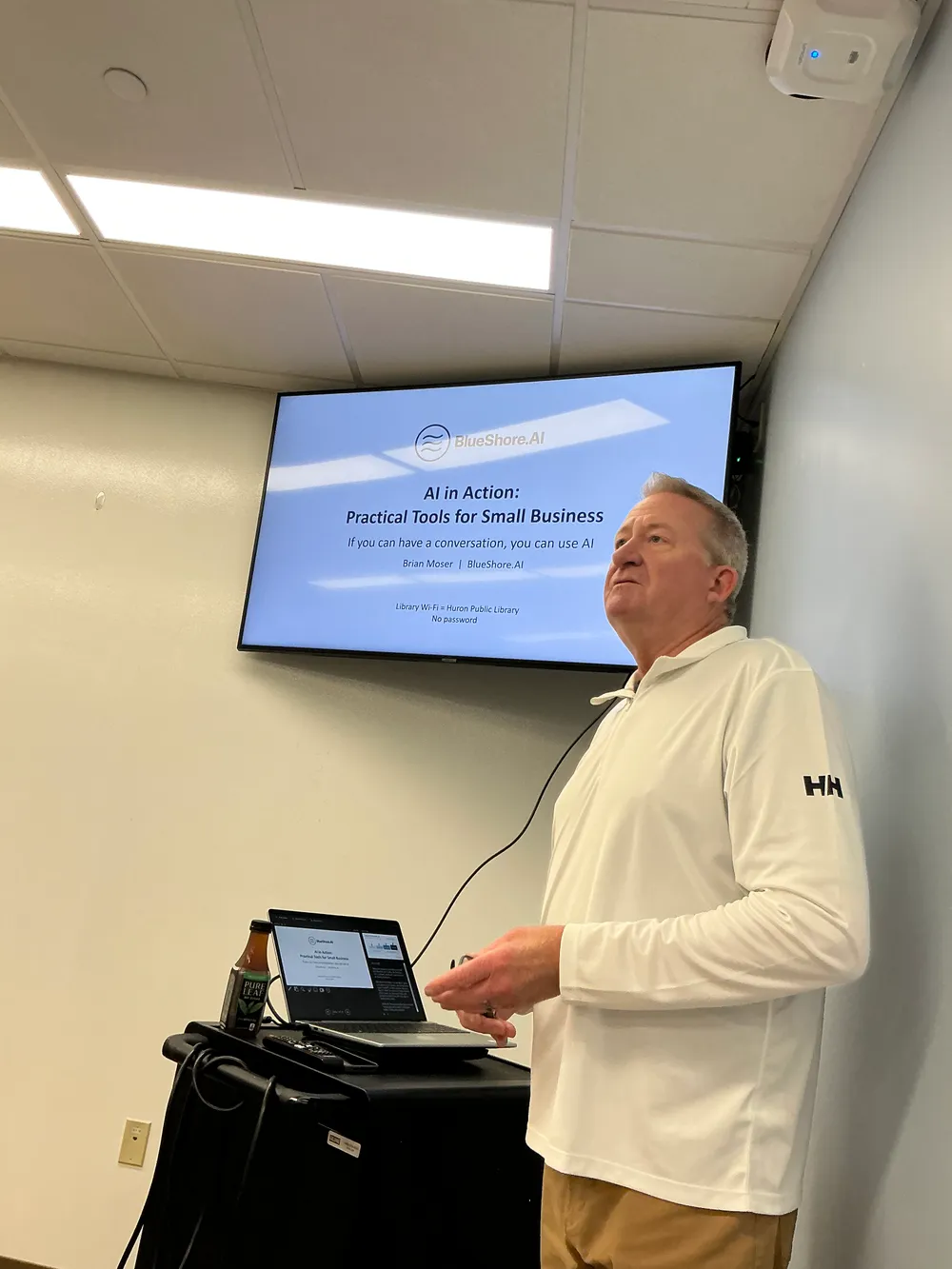
Five hands-on ways to put AI to work
We focused on everyday tasks rather than technical jargon. Here are five ways we explored using AI:
- Turn handwritten notes into usable notes. We demonstrated uploading a photo of handwritten notes and transforming them into clear, organized text. The important step is checking the result against the original, especially names, numbers, and anything the handwriting makes unclear.
- Turn those notes into an email. Capturing information is only part of the job. We also showed how AI can help turn notes into an email draft, ready for a person to review, adjust, and send.
- Use your voice to work with AI. You do not have to type every instruction. We demonstrated using voice to tell AI what you need, making the interaction more like a conversation than a software tutorial.
- Use AI to learn something new. We explored how AI can explain a topic, break it into smaller steps, and help you work through questions at your own pace. You can ask for a simpler explanation or an example that fits your business.
- Ask AI to teach you how to use AI. Prompting does not have to mean memorizing a special formula. We worked on explaining the task, providing useful context, and asking follow-up questions. AI can help you improve an instruction, explain what information is missing, and practice a better approach.
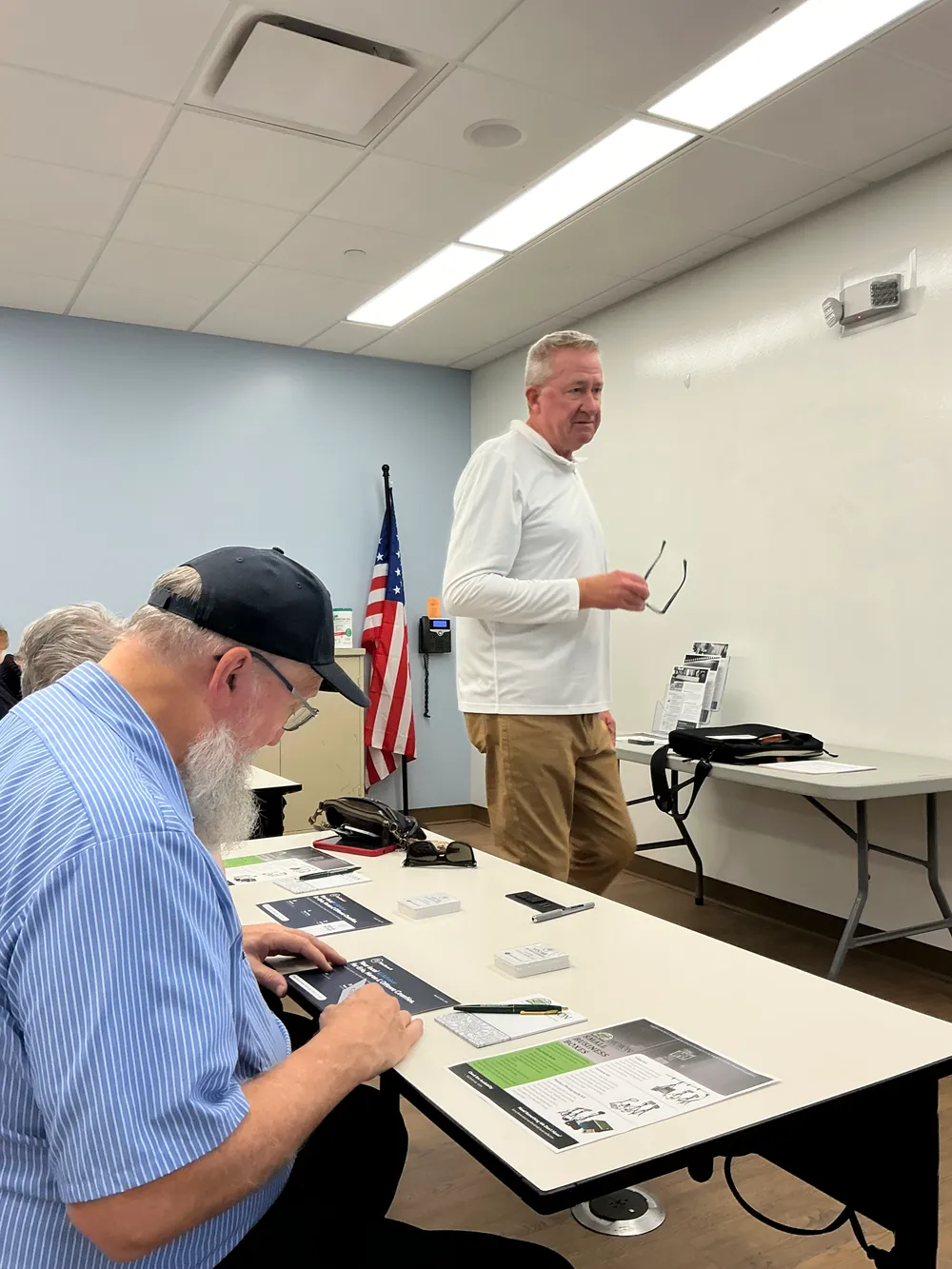
You can ask AI to help you ask better questions
One idea I wanted everyone to leave with is that you do not need to know everything before you begin. You can tell AI, “I am new to this. Ask me a few questions so you can help me write a better prompt.” That turns a blank screen into a starting point.
From there, keep the conversation going. Ask it to explain its suggestions, show another example, or walk you through the next step. Then use your own judgment to decide what fits. AI can support your thinking, but you still know your business and your customers.
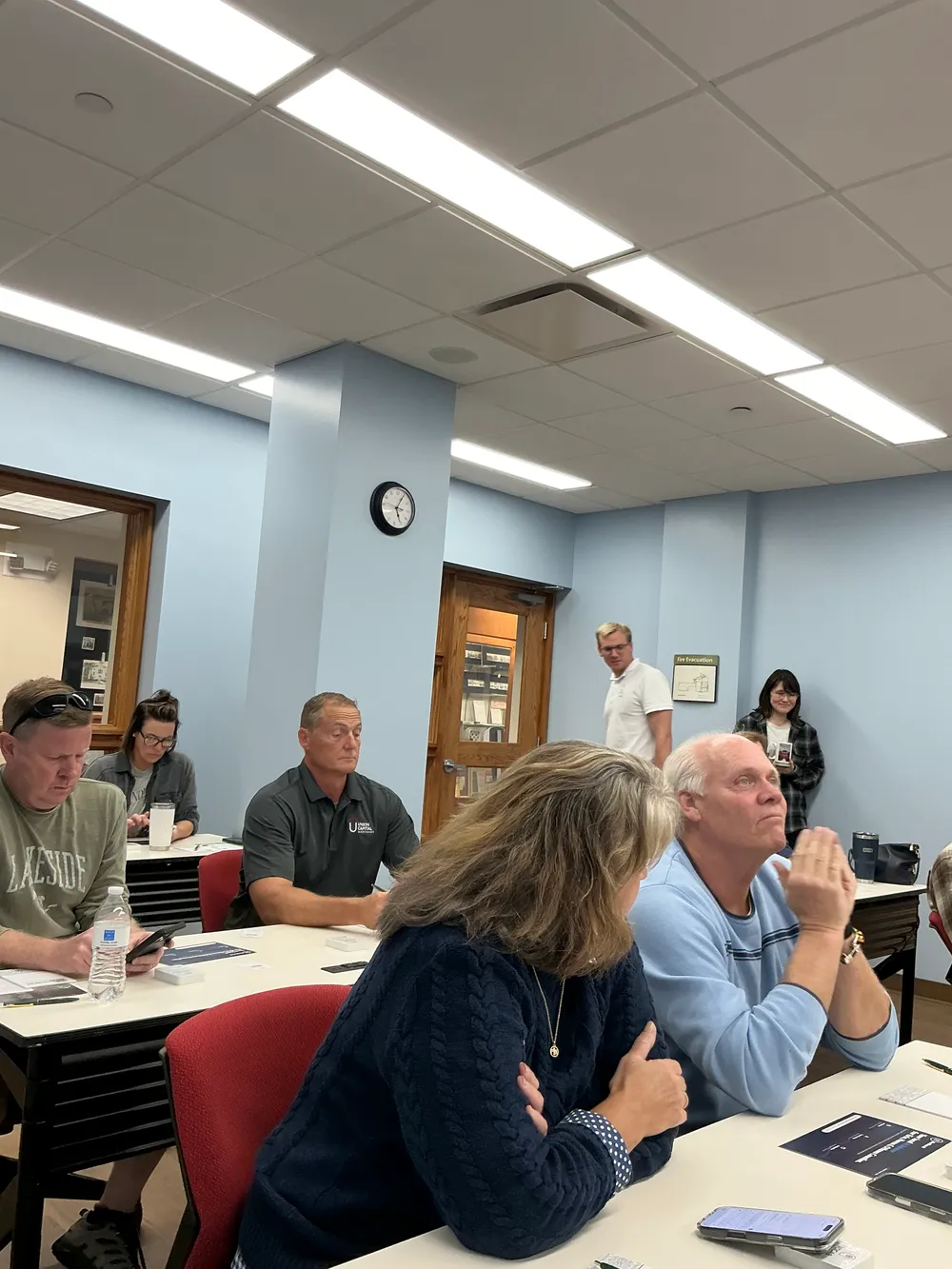
Start with one task you already do
We covered these examples and much more, but the best next step is not to change everything at once. Pick one task you already do, try AI on a low-risk example, and review what it produces. Use sample or non-sensitive information while you learn, and keep a person in control of anything that reaches a customer.
Thank you to Huron Public Library and everyone who joined us. It was a pleasure to spend time with a room full of small business leaders willing to try something new and practice together.
If you would like hands-on AI learning for your own team, explore our business training workshops or get in touch with BlueShore.AI.